
Behind the Book: Soldier’s Joy by M. F. Jones
I have been fascinated by the Civil War since childhood, when my father brought home The American Heritage Picture History of the Civil War, along with a recording of songs from that era. Age 10, I was riveted by the photos of the people of that time-looking very serious as they sat rigid and unsmiling for the several seconds that it took to imprint their images on the photographic plates. I was also haunted by the tragic pictures of slain soldiers lying where they fell on the battlefield. The music of the time imprinted itself on my childhood imagination, especially tragic songs like "Somebody's Darling," "The Vacant Chair," and "All Quiet Along the Potomac Tonight."
As an adult, my fascination deepened when my husband, a professional trumpet player, joined a Civil War-style military band and I went with him to reenactments and historical sites, dressed in period-appropriate clothing (making me thankful that corsets, as a necessary part of women's wardrobes, have been consigned to history!). I was amazed at the reenactors' commitment to make every aspect of their portrayal as authentic as possible, from the uniforms and weapons, to the utter lack of technology, to the gracious manners of an earlier time, to musical instruments and camp equipment, right down to the kinds of foods they cooked over open fires.
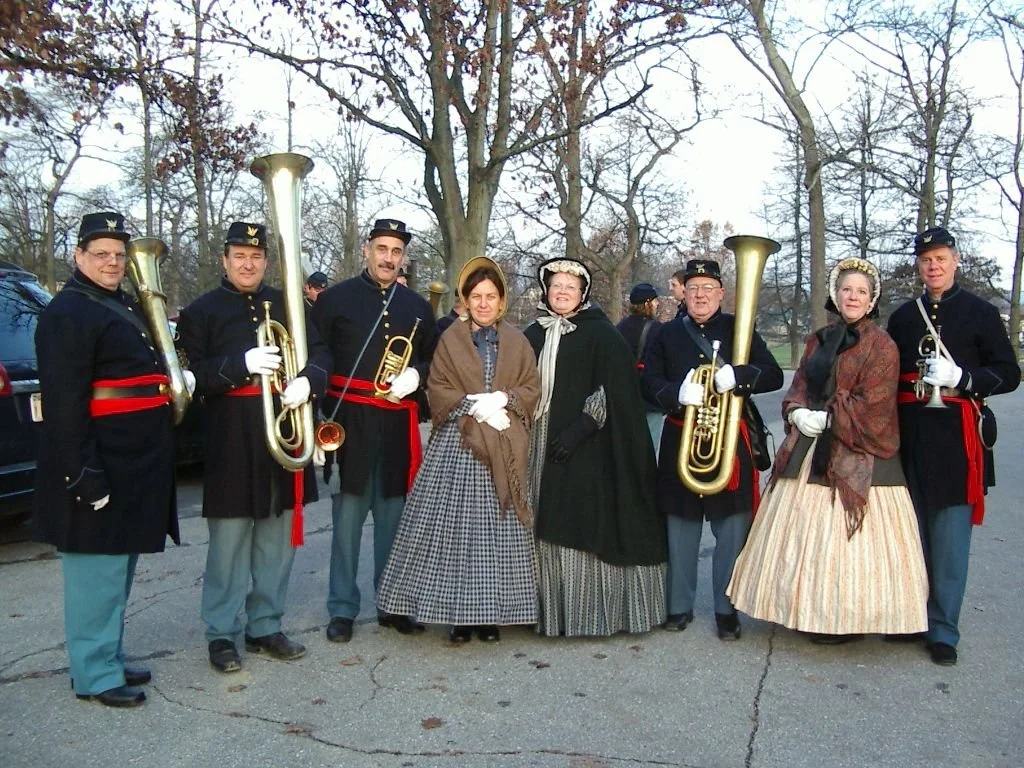
Some members and companions of the Federal City Brass Band. My husband, Doug Hedwig, and I are on the far left.
When, in 2008, I decided to quit my editorial career and devote myself to fulfilling my lifelong dream of writing fiction, I was drawn to write about the Civil War in my first novel, Stones River, the first book of The Sentinel Heart trilogy. In the second book, Soldier's Joy, just published, I wrote about another conflict and another century - the Iraq war of the early 2000s.
My time spent at reenactments gave me an idealized image of the Civil War, with the peaceful woodland encampments lit by campfires and candle lanterns, and filled with the music of old-time instruments weaving amid the sounds of crickets and night birds.
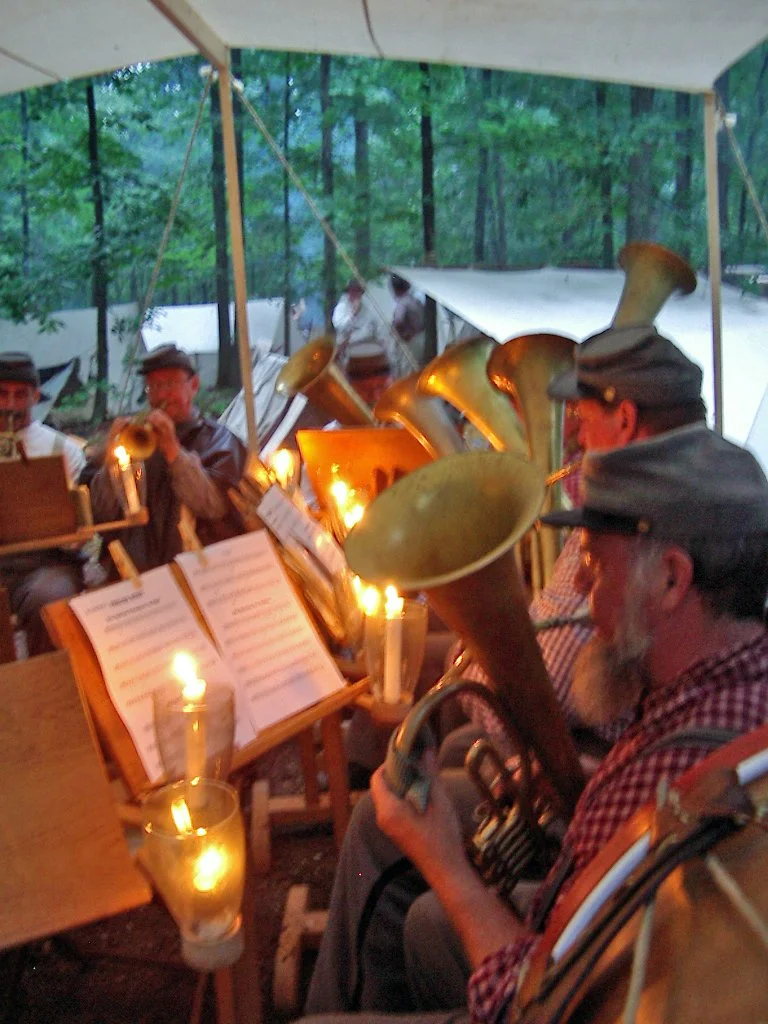
An informal evening concert in camp.
During the reenacted battles, the band played, as some bands actually did during the Civil War, to boost the morale of their side. And at the end of the battle, the "casualties" got up, brushed off, and went back to camp for a cold drink and a good dinner.
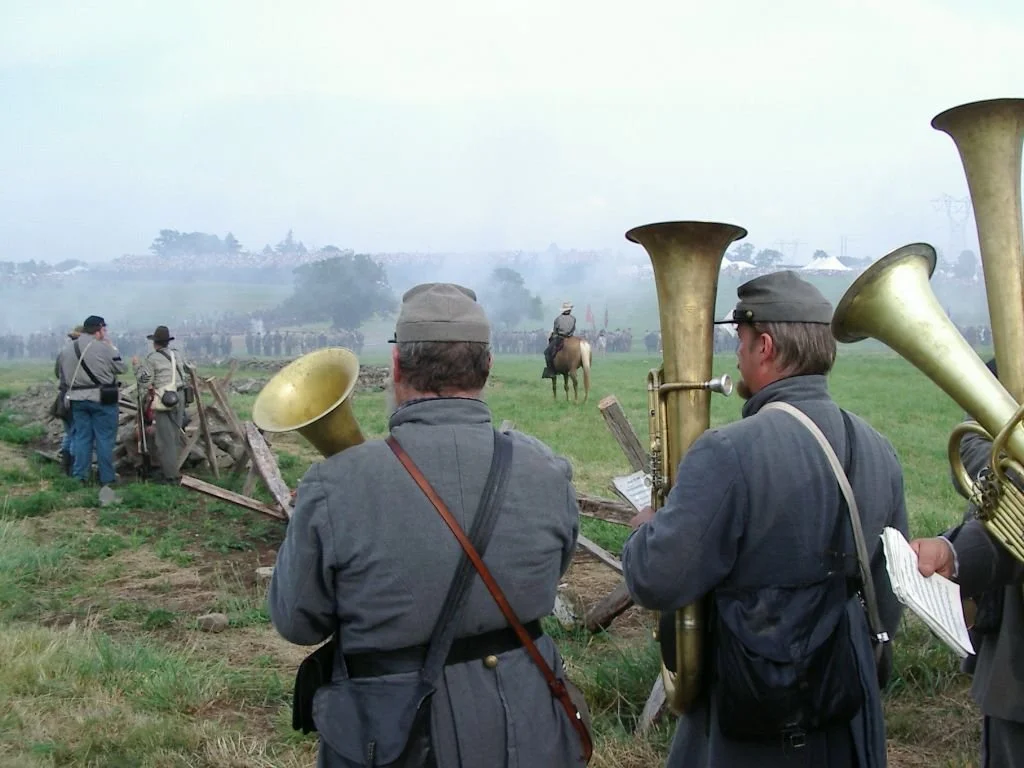
The Federal City Brass Band (portraying the 26th North Carolina Regimental Band) playing during a reenacted battle.
It was all a fascinating exercise in living history, respectful and accurate, though with more than a touch of fantasy. However, the research I did into both wars, Civil and Iraq, dispelled any illusions that the reality of war is anything other than-as Iraq War veteran Avery, the modern-day hero of Soldier's Joy, puts it: "brutal and soul-murdering and an unforgivable waste."
Still, as long as human nature remains unchanged, wars will be waged. I mean for my work to honor the soldiers throughout our country's history who fought, and still fight, for what they believe in, and the ones at home who love them, sometimes have to mourn them, and sometimes-like Jessie in Soldier's Joy-give their all to help them heal.
